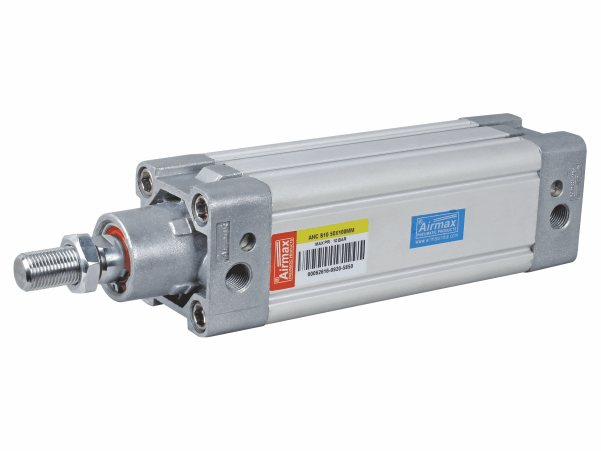
Modern manufacturing depends heavily on automation, precision, speed, and reliable equipment performance. Industries continuously seek technologies that can improve production efficiency while maintaining consistent operational standards. Pneumatic cylinders have become essential components in many manufacturing systems because they provide controlled linear motion using compressed air.
From assembly lines and packaging equipment to material handling and automated machinery, pneumatic cylinders support a wide range of industrial operations. Their simple design, quick response, and dependable performance make them valuable components in modern automation systems.
Understanding Pneumatic Cylinders
A pneumatic cylinder is a mechanical device that converts compressed air energy into linear mechanical motion. The basic design typically includes a cylinder barrel, piston, piston rod, seals, and end covers.
When compressed air enters the cylinder, it creates pressure against the piston. This pressure moves the piston and produces linear motion that can be used to push, pull, lift, position, or move different components.
Pneumatic cylinders are available in various designs and sizes to meet different industrial requirements. Selecting the correct type depends on factors such as operating pressure, load, stroke length, speed, and application conditions.
.webp)
Importance in Industrial Automation
Automation has transformed modern manufacturing by improving production speed, accuracy, and consistency. Pneumatic cylinders play an important role in automated equipment because they provide fast and repeatable motion.
Manufacturing systems often require components to perform the same movements continuously. Pneumatic cylinders can support these repetitive operations while maintaining dependable performance.
They are commonly used for clamping, lifting, pressing, pushing, positioning, and transferring materials. Their versatility allows them to support numerous industrial processes.
Reliable and Fast Operation
Speed is an important requirement in many manufacturing facilities. Production equipment must complete operations efficiently to maintain productivity and meet manufacturing targets.
Pneumatic cylinders can provide quick movement and responsive operation. This makes them suitable for high-speed automation systems and repetitive manufacturing tasks.
Reliable movement also contributes to better process consistency. When equipment performs predictable actions, manufacturers can maintain smoother production processes and reduce unnecessary operational interruptions.
Versatility Across Manufacturing Applications
One of the major advantages of pneumatic cylinders is their ability to support diverse industrial applications.
Packaging machinery uses them for sorting, filling, sealing, and product handling operations. Automotive manufacturing facilities may use pneumatic systems for assembly, positioning, and material movement.
Food processing, pharmaceutical production, textile manufacturing, electronics, and general engineering industries also use pneumatic cylinders in automated machinery.
Different cylinder designs allow industries to select suitable solutions based on available space, motion requirements, load capacity, and operating conditions.
Simple Design and Maintenance
Industrial equipment should be efficient and manageable to maintain. Pneumatic cylinders generally have a practical design with fewer complex components compared with some other motion control technologies.
Regular inspections can help identify air leaks, damaged seals, alignment problems, or component wear before they cause significant equipment issues.
Using clean compressed air and maintaining suitable system pressure can support consistent performance. Proper installation and scheduled maintenance may also help extend equipment service life.
Supporting Manufacturing Productivity
Productivity is a major priority for modern industries. Equipment that operates efficiently and consistently can help businesses improve production output.
Pneumatic cylinders support automated processes by providing controlled and repeatable movement. Their ability to perform frequent operating cycles makes them valuable for continuous manufacturing applications.
Efficient automation can also reduce dependence on manual operations for repetitive tasks. This allows workers to focus on other important responsibilities while machinery performs controlled movements.
Factors to Consider When Selecting a Pneumatic Cylinder
Choosing the right pneumatic cylinder is essential for achieving reliable performance. Several factors should be carefully evaluated before making a selection.
Operating pressure and required force are important considerations. The cylinder must generate sufficient force to handle the intended load.
Stroke length determines the distance the piston travels, while operating speed influences how quickly the cylinder completes its movement.
Environmental conditions, mounting requirements, available installation space, and operating frequency should also be considered.
Selecting a cylinder based on specific application requirements can improve efficiency and reduce unnecessary maintenance.
Improving Safety and Process Control
Modern manufacturing facilities require equipment that supports both productivity and safe operations. Pneumatic cylinders can contribute to controlled machine movement when properly selected and installed.
Accurate motion helps manufacturing equipment perform tasks consistently. Proper system design can also reduce the possibility of unexpected movements and operational disruptions.
Regular maintenance, correct pressure settings, and suitable components are essential for maintaining reliable performance.
Future of Pneumatic Automation
Industrial automation continues to evolve with advancements in smart manufacturing and modern control technologies. Pneumatic systems are also developing to meet changing industrial requirements.
Improved designs, advanced monitoring capabilities, and better system integration are helping manufacturers achieve greater control and efficiency.
As industries continue adopting automated production technologies, pneumatic cylinders are expected to remain important components in manufacturing equipment.
Conclusion
Pneumatic cylinders are essential for modern manufacturing systems because they provide reliable, fast, and controlled linear motion. Their versatility allows them to support applications in packaging, automotive production, food processing, pharmaceuticals, material handling, and many other industries.
Selecting the correct cylinder requires careful consideration of operating pressure, load, stroke length, speed, installation conditions, and application requirements. Proper maintenance and regular inspections can further improve long-term performance.
As manufacturing continues moving toward greater automation and efficiency, pneumatic cylinders will remain valuable components for supporting productivity, process control, and reliable industrial operations.
Airmax Pneumatics Ltd Web2.0:
1. https://airmaxpneumatic105395.substack.com/p/how-a-quick-exhaust-valve-improves
2. https://ext-6318796.livejournal.com/3789.html?newpost=1
3.https://ext-6318796.livejournal.com/3547.html
4. https://ext-6318796.livejournal.com/3295.html
5. https://open.substack.com/pub/airmaxpneumatic105395/p/why-industries-trust-air-pressure?r=1ugiez&utm_campaign=post&utm_medium=web&showWelcomeOnShare=true
6. https://ext-6318796.livejournal.com/2905.html
7. https://open.substack.com/pub/airmaxpneumatic105395/p/single-solenoid-valves-a-reliable?r=1ugiez&utm_campaign=post&utm_medium=web&showWelcomeOnShare=true